Open the Secrets of Effective Dog Training for a Happier and Well-Behaved Pet Dog
Successful dog training pivots on a deep understanding of canine behavior. By acknowledging just how canines connect, owners can better provide to their needs. Consistency and favorable support play important duties in fostering desirable routines. Yet, many still deal with typical blunders that can hinder development. As the journey of training unfolds, checking out reliable strategies can expose the capacity for a better, well-adjusted pet dog. The next steps may shock also one of the most skilled dog owners.
Understanding Your Dog's Habits
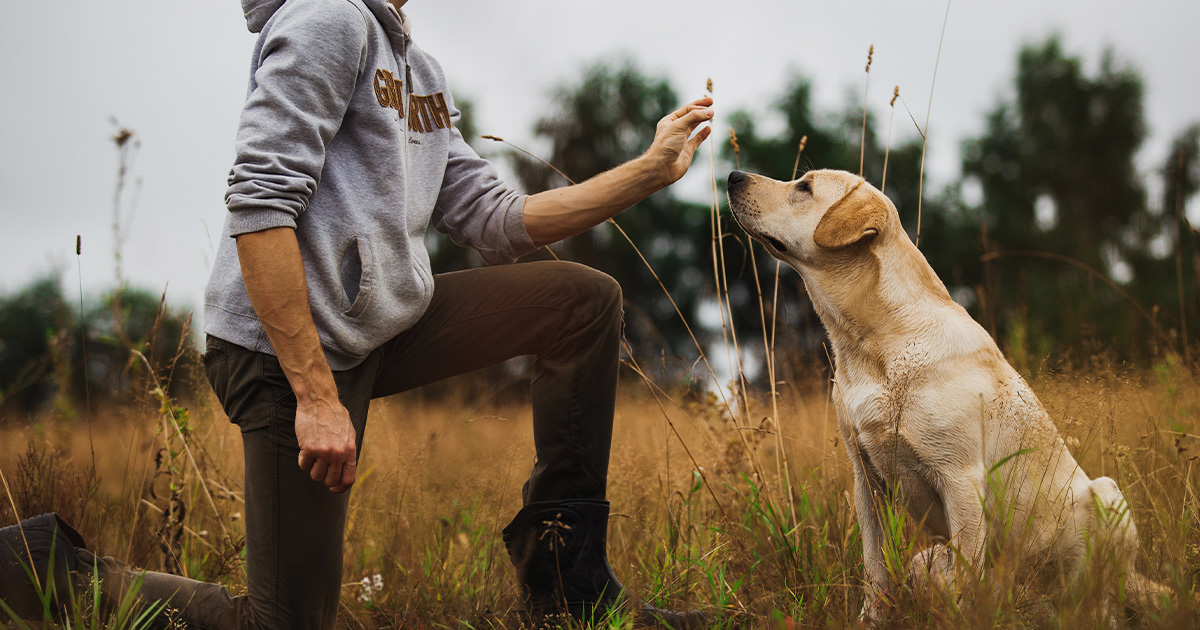
The Significance of Uniformity in Training
Uniformity in training is crucial for cultivating a pet's understanding of commands and assumptions, as it produces a steady knowing environment. Dogs are extra most likely to understand what is being asked of them when owners use the very same commands, hints, and rewards continually. Irregular training can result in confusion, where pets may not understand which actions are preferred, leading to aggravation for both the owner and the pet dog. Developing a routine aids strengthen learning, enabling canines to link particular actions with their matching commands. Additionally, regular reinforcement of regulations and limits helps grow etiquette over time. Inevitably, a commitment to uniformity not only improves a pet's training experience however additionally enhances the bond in between the pet and proprietor.
Positive Reinforcement Strategies
Positive support strategies are crucial for efficient dog training, stressing the significance of incentives and treats. Consistency and timing play essential roles in strengthening wanted behaviors, making sure that dogs make the connection in between their activities and the favorable end results. By executing these approaches, trainers can promote a much more interesting and effective understanding environment for their animals.
Benefits and Deals with
Reliable dog training often rests on the calculated use of incentives and deals with, which act as powerful motivators for canine actions. These incentives can significantly improve a pet dog's willingness to find out and conform with commands. When a pet effectively performs a desired action, instant benefits-- such as delicious treats or enthusiastic praise-- strengthen that habits. The kind of benefit can vary, depending upon the individual dog's preferences; some may respond better to food deals with, while others might grow on spoken affirmations or play. Furthermore, varying the rewards can maintain a dog's passion and involvement throughout training sessions. By using benefits efficiently, fitness instructors can create favorable organizations, causing enhanced obedience and a happier, well-adjusted pet.
Uniformity and Timing
Effective dog training is not exclusively reliant on rewards and deals with; it additionally depends upon the consistency and timing of those reinforcements. Uniformity includes applying the very same commands and actions across various training sessions, making certain that the dog comprehends expectations. Timing, on the have a peek at this site various other hand, is necessary; benefits must be offered promptly after a desired actions to produce a clear connection in between the action and the incentive. Delayed reinforcement can perplex canines, leading them to link the reward with an unconnected habits. By keeping constant cues and supplying timely support, trainers boost the possibility of wanted behaviors being duplicated. This combination promotes a solid understanding, eventually leading to a delighted and mannerly animal.
Usual Training Pitfalls to Prevent
Many dog owners unwittingly fall into usual training pitfalls that can impede their progression. One primary error is inconsistency in assumptions and commands, which perplexes the dog and delays finding out. In addition, many proprietors fail to recognize the importance of satisfying great habits promptly, causing misconceptions about what actions are being strengthened. Over-reliance on penalty instead of favorable support can also create worry and stress and anxiety, inevitably harming the bond in between pet and owner. Another common error is ignoring to learn varied atmospheres, restricting a pet dog's flexibility. Setting unrealistic expectations can lead to frustration for both the owner and the dog. Recognition of these challenges is essential for fostering reliable training and an unified partnership with the family pet.
Socializing: Secret to a Well-Adjusted Dog
Socialization is important for developing a well-adjusted dog, as it exposes them to numerous individuals, atmospheres, and experiences. Early and constant socialization aids pets discover suitable behaviors, reducing anxiety and stress and anxiety in unknown situations. By interacting with various pet dogs, people, and stimulations, they end up being much more confident and versatile. Favorable experiences during socializing can protect against future behavioral issues, such as aggressiveness or extreme puppy behavior training shyness. It is important for proprietors to create opportunities for their pet dogs to engage with varied settings, whether via young puppy classes, dog parks, or structured playdates. A well-socialized dog is commonly a lot more unwinded and less complicated to train, leading to a better pet and an extra harmonious partnership with their owner and the area.
Building a Solid Bond Through Training
Developing a solid bond between a pet and its owner is crucial for efficient training and total companionship. This bond is developed through constant training sessions that make use of positive support strategies - Dog Trainer Near Me. When an owner awards wanted behaviors with treats, appreciation, or play, the dog finds out to associate training with positive experiences. Furthermore, investing high quality time with each other, such as engaging in play or outdoor activities, promotes trust fund and understanding. Regular training not only improves interaction yet also helps the dog really feel secure and valued. As the connection strengthens, the dog comes to be extra responsive to commands, resulting in a well-behaved family pet. Inevitably, a official statement solid bond causes a harmonious partnership, enriching both the dog's and owner's lives
Frequently Asked Concerns
For How Long Should Training Procedure Last for Finest Outcomes?
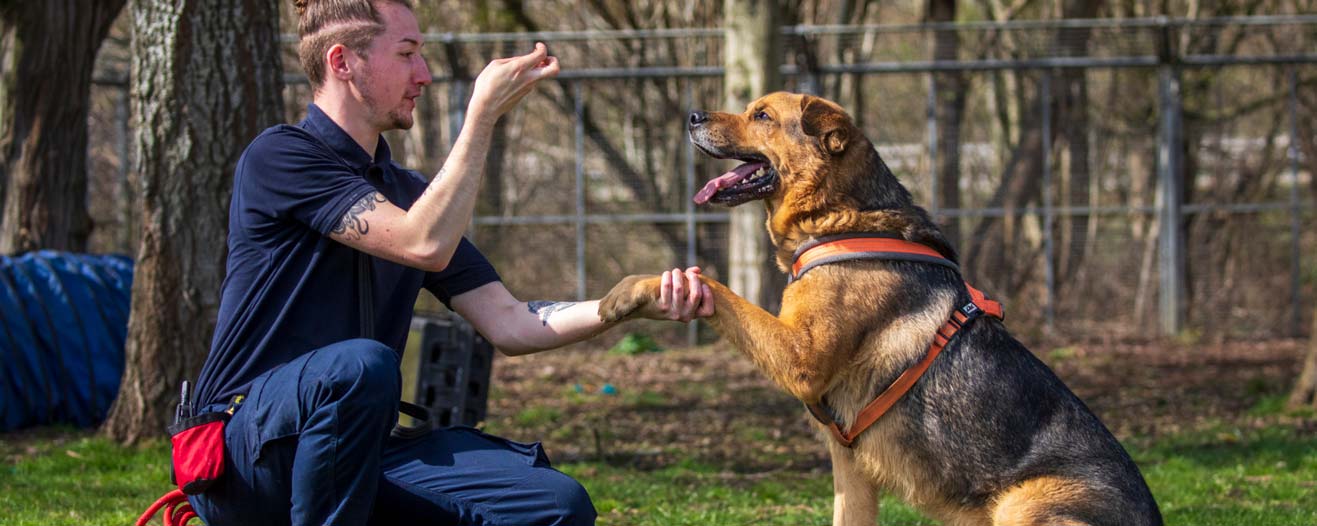
What Age Is Suitable to Start Training My Young Puppy?
The perfect age to begin training a pup is around eight weeks. At this phase, they are receptive to finding out and socialization, which lays a solid foundation forever habits and obedience throughout their lives.
Can Older Pets Discover New Commands Effectively?
Yes, older pet dogs can learn new commands properly. While they may call for more persistence and consistent reinforcement, their capability to understand and respond to training can be just as strong as that of younger pet dogs.
How Do I Take Care Of Disturbances Throughout Training?
To handle distractions during training, one must choose a peaceful atmosphere, gradually present disturbances, use high-value incentives, and keep the dog's emphasis through regular cues and persistence, making certain a positive knowing experience for the pet dog.
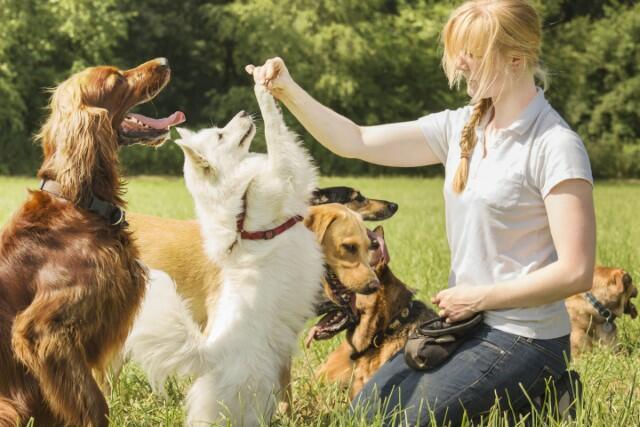
What Tools Do I Required for Effective Dog Training?
Necessary tools for successful dog training consist of a strong leash, collar or harness, treat bag, high-value treats, clicker, training mat, and playthings. These products help with effective interaction and favorable reinforcement, making certain an effective training experience.
While numerous dog owners might assume they recognize their family pet's behavior with ease, a much deeper exploration discloses that canines connect with a complex mix of body language, articulations, and social cues. In addition, a pet dog's social interactions with other dogs and people provide crucial context regarding its actions. It is crucial for owners to produce possibilities for their canines to involve with diverse setups, whether through young puppy courses, dog parks, or structured playdates. When an owner compensates desired habits with treats, appreciation, or play, the dog discovers to link training with positive experiences. Necessary devices for successful dog training consist of a sturdy leash, collar or harness, treat bag, high-value treats, remote control, training floor covering, and toys.